google search

Custom Search


Education is a social process. Society uses education as a means of socialization of its future generation. It also uses education as a means of preserving and transmitting its culture. Education is also a part of the plan of future development of a society. Society uses education as a means to develop its life standard and to make its life more comfortable. Society establishes and protects education for this purpose. It also influences the type of education given in the schools. Society also influences the curriculum implemented in the educational institutions. All the societies are integrated in the form of a state and the education is based on the policy of a states. State has become a legitimate organization for looking after the welfare of people living inside its territory. As a large organization of societies, states uses education as the planning of future.
Although state makes a plan to provide educational opportunity to all of its citizens without any discrimination, but there are many factors which hinders the access of education of the various groups of society. Many groups of society are not able to adequately enjoy the educational opportunities provided to them because of various reasons.
The state should have to adopt a special social policy for education of the child mainly of the deprived groups. Apart from providing all an equitable chance to education, society wants to propagate some idea among its member. This also becomes a part of social policy. The main policies of a society in modern times are as fallows:
  1. Equal for disadvantaged
  2. Equal for delinquents
  3. Equal for national integration
  4. Equal for international understanding
Untouchability has been practiced in the society for a long time in developing countries like:Nepal, India and other backward countries which has become one of the most common social evil. It has been practiced in some backward societies by backward and conservative people.
In the past, The people, who could earn more money and become rich , established themselves supreme. The people who involved in poorly paid professions could not establish themselves as the normal people. They became poorer and poorer because of the egoism of the rich, they gradually started calling the poor the 'untouchable' . The poor could not raise the voice for their rights. Gradually the practice of untouchability was established in the societies, and it has been in practice since then.
The oppressed may start destructive struggles against the social structure; and it ultimately invites hatred, hostility, betrayal, brutality, and so on among the people. They cannot enjoy human rights. The practice of untouchability stops people from building up fraternity among them. It also stops people from being virtue to uplift human civilization.
In order to raise the socio-economic status of the untouchable, particular programmes should be implemented. It is realized that the organization established in the name of untouchable cannot raise their status; rather they are registered untouchable for ever. Therefore, such organization should be reformed.

Therefore, such social evil should be removed from the society as far as possible. Because untouchability is one of the most deeply rooted evil performed by a people who think untouchability as an slogan. In this twenty first century, also don't follow such social evil 'untouchability' which stigmatized our identification and dignity. I request all of the people or viewer not to perform such bad social evil 'untouchability' . I hope u will not will u ?

The town areas differ from village in terms of facilities, life styles and settlements and large markets, dense and crowded settlements and facilities like road, transportation and communication have characterizes the city areas. However, village life is better from health point of view. There is fresh air, clean water and scattered settlement. The most effective way to minimize those problem is to maintain planned urbanization.
  • Provision of facilities in rural areas:
The major causes of unplanned urbanization is the lack of various services and facilities in the rural areas. The rural areas still lack the most rudimentary services and facilities. Therefore, the services and facilities associated with drinking water, electricity, health, communication and education should be provided in the rural areas as well which helps to minimize the adverse effects brought y unplanned urbanization
  • Employment opportunity:
People are attracted toward town areas for the income generation. Business, industry and income generation projects are the major source of employment. In which employment opportunity also plays a vital role to solve the problem of unmanaged urbanization.
  • Dormitory towns:
For the planned urbanization village areas should be facilitated and converted into small towns, so that it can be converted into larger cities. In such areas various programmes about income generation, cottage industries and employment should be launched. It discourages the unplanned urbanization.
  • Decentralized development:
Caring out development activities in all the areas in a balanced way helps to balance the distribution of population. The strategy should be well formulated so that it helps to establish the development programmes. Development is also one of the basic source to uplift the unmanaged urbanization into planned urbanization.
Historical Development of Education in Nepal
Although formal schooling in Nepal has a history of only about one hundred and fifty years, education of Nepal has long history of development. It is believed that Nepal has a glorious history of education because it was believed as " Tapobhoomi" for ancient Hindu priests. Traditionally education system of Nepal was guide by Hindu culture. In its very beginning it was a home-based system. Slowly it was transferred to gurukul or seminary, were the learned persons called as "guru" (teachers) were responsible for their education. The students had to live in these gurukuls for certain duration under the complete guidance of gurus. The gurus had to decide the type of education to be provided for the students.
The first modern school was established with the rise of Rana prime minister Jung Bahadur Rana established first school named as Durbar school in 1910 B.S. in the "Sakhchok" of his thapathali palace. It was based on English education system.This school was established with the purpose of providing education to the offspring and relatives of the ruler Rana family and the countries. The common people had not any access in this school. Although the modern education system begin with the establishment of this school, but the real development of education in Nepal took place only after 2007 B.S. after the establishment of democracy in Nepal. This historical development of education in Nepal from its beginning to modern time can be classified into four major periods. These periods are presented as fallows:
  1. Ancient period (before 1825 B.S.)
  2. Period of negligence ( 1825 to 1910 B.S.)
  3. Periods of opposition to education ( 1910 to 2007 B.S.)
  4. Period of expansion and development (2007B.S and onward)
When facilities are centered in town areas, there will be the flow of migration of people from villages to towns. If the planning is not proper the settlement becomes unhealthy; the sanitation and water supply fail to meet the needs of people and Secretary and health aspects are ruined. Unplanned urbanization is the condition resulted by the improper planning which leaves adverse effects on the health, sanitation, Secretary, housing and other such aspects of life, marked with uncontrolled migration.

Effects of unmanaged urbanization
The unmanaged urbanization causes various types of problems.
They are described below:

  • Lack of facilities :
Unmanaged urbanization results and the lack of health service, transportation, electricity, communication facilities which leads to the condition of unemployment.

  • Unhealthy settlement:
A resendental area needs fresh air, clean water, greenery and clean surrounding. When these facilities lack, the settlement becomes unhealthy in which unmanaged urbanization leads to unhealthy settlement.
  • Social disorder:
The urban areas, which are not properly managed, have more population pressure. The service and facilities are inadequate for large population in which unmanaged urbanization also leads to social disorder.
  • Environmental degradation:
The town areas have to face the problem of deforestation, unmanaged disposal of solid waste and environmental pollution in which unmanaged urbanization causes environmental degradation.
  • Population pressure:
Unmanaged urbanization process causes population pressure. When people from village areas migrate to town areas, there will be uncontrolled population in the town which brings adverse effects upon the environmental aspects.


Education is a social process. It can perform different functions in society. The society designs education to play the following five functions in society. These function of education in society are:
  1. Development of personality of individuals.
  2. Transmission of culture.
  3. Preservation of culture.
  4. Socialization of young.
  5. Creation of knowledge.
Besides these general functions, education plays some specific functions in society. Education is considered as a social process. As a social process, it has to play different roles for the welfare and development of society. Sometimes, it has to preserve the societal beliefs and culture; sometimes it has to change them according to the need of society. It is education which also changes the culture according to need of changing society. In this way, it can be said that education has different alternative functions in society. The alternative functions being played by education in society are as fallows:

  1. Conservative function:
This function of education emphasizes on preservation of culture, value system and traditions of the society. It also emphasizes on the transmission of these culture, value system and traditions to the future generations. This function of education is considered as the conservative function on that emphasizes on the preservation and transmission of old culture and tradition.

  1. Progressive function:
Education is a means of development. It is also the carrier of development. All the changes in the field of knowledge are the net sum of research in the field of education. Society is subjected to change according to the change in the field of knowledge. No society can remain in a static condition. It has to change itself according to the need of its context.
Alcohol is a liquid substance, intake of which stimulates the human nerve and results in hallucination. Alcohol is produced by the process called fermentation. It acts on the central area of the brain. Brain acting are slowed down under its influence. When a man drinks alcoholic substances, 20% of the alcohol is absorbed into the blood stream through the stomach walls. Remained 80% alcohol is only a little through the walls of small intestine. The blood carries alcohol directly to the brain and slows down a normal body function.
Ccauses of alcohol:
  1. Pressure from the friends.
  2. People think as if the personality grows when they drink alcohol.
  3. Some people take alcohol as the medium of reducing tension.
  4. In some ethnic communities alcohol is used in social rites and customs.
  5. Some people are attracted by the attractive advertisement of alcohol.
  6. Some people drink alcohol for the sake of pleasure.
  7. Young people are curious about the taste of alcohol.
  8. Imitation of family members is also a major reason for alcoholism.
Effects of alcohol:
Immediate effects
  1. A person becomes more talkative and aggressive.
  2. Person feels sleepy and depressed.
  3. Balance of the body is lost and accidents may occur.
  4. The capacity to make judgement is lost.
  5. Poor focus, double vision etc.
  6. The liver of the drunker becomes harder.
Long term effects
  1. Alcohol may causes ulcer, cirrhosis, gastritis and heart diseases.
  2. Alcohol also leads to infertility and sexual defunct.
  3. The digestion becomes wrost in the drunkard.
  4. Social prestige of a drunker is lost.
  5. Brain and spinal chord are highly effected by alcohol.
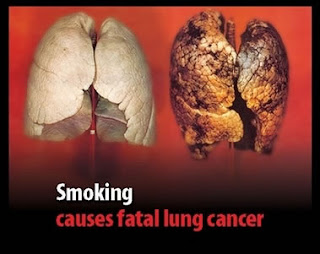
Tobacco is a plant. Its leaves are used for smoking or snuff. It is available in diff forms like chewing, smoking etc. It has been a common habit of many people which is a major social problem in a society. Its users are from young children to aged people. The new generation has been addict because of the fashionable age. They think themselves superior by using cigarettes. Similarly, the social structure has also become one of the major causes of smoking.
Causes of smoking
The various causes of smoking are given below:
Psychological causes
  1. Some people take smoking as the solace of tension.
  2. The smoker friends force them and they start smoking.
  3. Young children are curious about its taste. Therefore, they start smoking.
  4. Some people think that smoking gives pleasure.
Socio-cultural causes
  1. Some so called modern and well-off think smoking as a compulsion in party and gathering.
  2. In some villages parents ask their children to light it. They learn to smoke by this action.
  3. The children start smoking to show that they have become mature.
  4. The attractive advertisements attract children.
  5. Some youngsters take smoking as a status symbol.
  6. Children learn to smoke imitating their parents.
Effects of smoking
Tobacco contains nicotine, which is very poisonous for health. The modern generation has made smoking as an inalienable part of its life but smoking causes very hazardous effects to them. The effects of smoking are given below as short term and long term effects:
Short term effects
  1. Irritation of respiratory mucus.
  2. Increment of the pulse rate.
  3. The temperature of the body increases.
  4. Pattern of the brain wave changes.
  5. Damage of the optic nerve which may result blindness.
Long term effects
  1. Lung cancer and cancer of the larynx.
  2. Chronic bronchitis.
  3. Paralysis.
  4. Loss of appetite.
  5. Coughing and hoarseness of the voice.
  6. Fetal damage in pregnant women.
  7. Teeth, skin and fingers become pale.
  8. Loss of money.
  9. The social status is damaged.
Controlling measures of smoking
  1. Awareness programmes against should be launched.
  2. Advertisement of such things should be banned.
  3. Deceleration of smoke free zone.
  4. If smoking is accidentally started, try to reduce with day by day practice.
  5. The government must impose a heavy tax on tobacco.
  6. Let the youngsters involve in recreational activities.
  7. Parents should demonstrate healthy practices by not smoking.
1. FORMAL EDUCATION
Formal education is the product of civilization and division of labor. It is the most planned form of education. Formal education of hierarchical nature which is divided into different grades. These grades are generally tied up with the age level.
Schools issue certificate as an indicator of success of examination which is also recognized by society. It develops knowledge in systematic manner. It takes place for certain duration in certain place at certain time. The education provided by schools, colleges are the example of formal education.
Although formal education is an organized and well planned system of education which is mainly responsible for the development of knowledge, it is also criticized by many educationists such as Paulo Frieze, Ivan/ Licha and Reamer for its more formalized structure. They criticize this system for providing piecemeal education, which is not according to the need of learners.
People have to wait for a long time to get their required knowledge from formal system. It provides knowledge in passive manner. The education is more examination oriented rather than skill oriented. The students acquire knowledge passively only with the aim of passing the examination and getting certificate.
2. NON-FORMAL EDUCATION
Non-formal education system active as well as supplement education system to the formal educ-ation. It is a need based education system which does not require the fulfillment of formalities as the formal education needs. Any person requiring certain knowledge and skill can get this education without fulfilling any formality such as need to complete certain level of education.
Although, non-formal education has predetermined objective and curriculum but these are more need based. Examination may or mayn't take place at the end of education. It can take examination at the end of the program, but it is not concerned to pass or fail the learners. This education provides an alternative change to those people, who are not benefited from formal education. Adult education, continuing education, open education, functional literacy education, education for income generation and skill training are the example of non-formal education.
3. INFORMAL EDUCATION
Informal education is truly a life long process. It does not have a certain objective and curriculum. It does not have a fixed time or limit. In this education system, the agency which provide education may or may not have a well defined objective and well targeted group of learners.
This type of education has no limit in terms of time, students amount of knowledge to be learned. The learners learns that thing which he directly experiences. Education from news, templates, radio program, posters etc are the example of informal education.
Drug is a sedative, stimulant and hallucinating entity. WHO defines drug as any chemical entity or group of entities other than those required for the maintenance of normal health, the adminis-
tration of which alters the biological function and possible structure. There are various kinds of drugs like smelling, chewing, injecting and so on. Nowadays the drug has been abused. It has become a major causes of ruin of the modern generation. They are losing their valuable life due to drug addiction. Drug abuse is the harmful to the user and the society as well. According to the range of their effects, drugs are classified into three major divisions:
1 Depressants: The drug of this kind suppress the function of body especially those of brain and its parts. They make body reactions slow and dull. It includes narcotics, tranquilizers and alchol.
2 Stimulants: Such types of drugs enhances the temper of a person and reduce hunger. It includes cocine, nicotine and caffeine.
3 Hallucinogens: Drugs distorts reality, thinking and perception. Such drugs produce hallucinations. Marijuana is an example of such drug.
Some major drugs are introduced here:
# Heroine: It is also called smoke or brown sugar. It was used as the pain killer in the past but nowadays due to its missue it is legally banned. It causes Hepatitis, aids, Tetanus.
# Opiates: Opiates are the medicine used for pain killing, to stop diarrhoea and cough. The addicts missue it.
# Codeine: It is generally the medicine of cough. It is legally banned in Nepal. It is made from the opiates.
# Buprenorpine: It is available in injection or tablet.
# Cannabis: Cannabis is made from marijuana. There are 3 types found in Nepal.
The intake of drug includes it user to use in the next time. They cannot leave this habit. Such habit forming intake of drug is known as drug addiction. This is a great global problem. The young generation is much affected by drug addiction. Therefore, we should be far away from such bad habit in our life.
Education is a process of drawing out the internal capabilities of people to make them capable to solve the problems of their life and adjust them to their social environment. This process is carried out in many forms. This process takes place from the cradle to grave. It is truly a life-long process.
People can get education both from planned and unplanned means. In ancient time, people used to get education in an unplanned manner. It was informal in nature. People used to acquire knowledge from direct experiences and they used to transfer their knowledge to their offspring. Their was no Barrett of age, place and duration. Their was no teacher and also no student. People used to acquire knowledge according to their need, will and interest. Many of such knowledge gradually vanished, because they were not property transmitted to others. In this way, society needed an institution which could property preserve their valuable experiences and transmit them to future generation in an organized manner which give birth to the modern schools.
Gradually, the education in school was organized in graded manner to develop it in a more systematic way. Schools developed examination system to valid the amount of acquisition of knowledge by an individual. They started to issue certificates as an indicator of acquisition of knowledge by the leareners. In this way, education from school became formal.
Formal education system limits education to schooling. It requires specific prerequisite to enter in this system. This formal structure of education podded many barriers for the attainment of meed based knowledge in terms of age, duration, place and prerequisite. This education is considered as more need based in comparison to formal education.
Composition of population refers to the arrangement of population according to the social characteristics like age, sex, religion, occupation and martial status. Composition of population is based on the division of social hierarchical relations. The study of population composition is very important from various points of view. They are enlisted below:
* It helps to find out the structure of population on the basis of social status.
* It helps to government and other organizations to launch the programmes and make plans and policies.
* Population composition is the pillar of demographic study. It is the base of many theories related to population.
* In some cases, special programmes should be launched for backward and deprived people. Population composition helps in it.
* Population composition helps us to know how the social organization are formed. We can know about the diversity in religion, castes and many other social structures.
The composition of population is studied according to caste, religion, age, sex, occupation, language etc. Composition of population on the basis of various charestericities is given below:
Composition of population by age
Age composition of population refers to the study of population on the basis of various age group. There are three major divisions in age composition of people.
- 0-14 years
- 15-59 years
- Above 60 years
Among these age groups, 15-59 years is known as economically active population. The other two age groups are inactive or dependent population. The age composition of population helps us to know how many people are small children, how many of them are old and how many belong to reproductively fecund age group also. But it makes the study lengthily. Therefore, demographers have made the study quinquennial.
Composition of population by sex
The structure of population on the basis of male-female distinction is known as sex composition of population. Sex composition of population can be studied in regard to how many males and how many females live in a country.
Sex composition of population helps us to know about the arrangement of population on basis of male-female distinction. It helps to make plans and policies related to upliftment of female.
Urbanization is a development process of converting villages areas into town by managing services and facilities. Urbanization brings changes in physical facilities, teaching, social aspects and some other aspects. The process of urbanization also continues in association with the process of industrial development. The urban areas is also classified as municipality, sub-metropolitan and metropolises. The major reason for urbanization is rapid population growth and the tendency toward industrialization.
The process of urbanization commences with the provision of infrastructures-physical, economic and social aspects. The unman aged urbanization causes various types of problems with results in the lack of health services, transportation, electricity and communication facilities.
On the basis of management of facilities and its Harmony with environment, urbanization can be regarded as:
* Managed urbanization and
* Unman aged urbanization
Urbanization is called managed, in which the relationship among the different components of the environment is harmonious in which we can discuss unman aged urbanization.
Thus, urbanization results to the condition of unemployment too. In urbanization process, there is a massive destruction of forests, dense housing and improper disposal of the waste which leads the unman aged urbanization to unhealthy settlement. The limited amount of resources should be shared among the people which are inadequate for large population. Unman aged urbanization leads to social disorder too. Because of over-exploitation of resources, the unman aged urbanization causes environment degradation which effects upon the environment aspects. The most effective way to minimize those problems is to maintain planned urbanization which helps to reduce the unplanned urbanization.
The intents of any process are generally expressed by many words such as aims, goal, purpose, objectives etc. Generally these words are used as synonyms, but in actual sense all these word carry different meaning. The exact meanings of educative process are as follows:
Aims: Aims are social execution and desires towards education. They are broad and may cover the native life.
Purpose: It expresses the intention of the learner or the society towards getting education.
Goal: Goals are the more specifically worded statements which are related to the acquisition of knowledge and skills needed for the adjustment's in life.
Objectives: These are specific statements directed toward the acquiring of specific knowledge, skill and attitude.
Idealists believe that the aim of education is self realization, where as naturalists believe that aim of education is to develop the skill of self preservation. Realists believe that the ultimate aim of education is to develop the skills to individuals, which are necessary for the attainment of pleasure in the life.
The aim of the education differs nation to nation, place to place, time to time etc. It is precisely related to the aim of life and it changes to the life situation. It may be general or specific.

There is a great discussion among scholars about the entity of education as a separate discipline. Some scholars believe that education is not a separate discipline. It is only a loose combination of different disciplines such as philosophy, pedagogy, psychology etc.
A discipline is an internal body of knowledge which has distinct origin, theoretical structure, foundation and research methodology known as a product of human experience. Human beings are discovering different types of knowledge from very beginning of their own origin. They experienced the all natural phenomena around them and also find out the processes behind them. It developed a hierarchy of knowledge.
Education is a distinct disciplines which was the product of human experiences. Education originated due to the endeavor of human being to reveal the process of human learning. The main inquiry related to the origin of education as a discipline is " what are the real knowledge and how an individual acquires the knowledge" .
Education as a separate discipline is rich of the many facts, concepts, principle and laws, which furnish the theoretical structure of the discipline. All the inquiries related to field of education can be answered on the basis of those theoretical structure. All those features related to education supports the view that education is a separate discipline which has its distinct origin, theoretical structure , foundation and research methodology.
Generally, education means the acquisition of knowledge, understanding, intelligence, conscience, wisdom etc. Common people think it is the process which takes place in schools and colleges and the person, who has acquired certificate from those institutions can only be termed as educated. But in the real sense, it is not limited only to schooling. There is no limit of time, place and age for the acquisition of education.
People can acquire knowledge or education everywhere, in every moment of their life without the bound of age. They can get education from every source such as schools, parents, society, colleges, mass media etc. One can acquire the needed ability, knowledge skills, attitudes and aptitude from different means.
Education is the aggregates of all experiences by which a persons develops ability, attitudes and other forms of behaviour of practical value in the society and which they live. The meaning of education can be discussed from different perspectives. In this 21 century, education is one of the most important needs in our life which takes every one towards the perfection. On the same hand, education has proved as one of the most basic need for the people .In this way, i suggest all of the person to takes education as an required need .
Hypnosis is defined as the state like deep sleep in which a person's actions are controlled by another person. Production or practice of hypnosis is called hypnotism. The person who produces hypnosis on the next person is known as a hypnotist. The person on which hypnosis is produced and practised is called a subject. It is said that hypnotic trance is certainly useful and beneficial for the subjects.
There are many method of producing hypnosis; the most common method is given below.
The common procedures of producing hypnosis can be mentioned below:
* Step1: It is the stage of convincing the subject. The hypnotist tries to convince the subject by explaining the advantages of it.
* Step2: It is the stage of preparing and setting physical component's of the room. External stimulation's and disturbances are reduced to concentrate the subjects attention.
* Step3: It is the stage of light trance. The hypnotist starts suggesting the subject in a soft endless voice. The subject fallows his suggestions closing the eyes. At the stage, simple suggestions are given.
* Step4: It is the stage of the deep trance. The hypnotist starts giving difficult suggestion progressively. The subject cannot listen other speech's and sounds expect the suggestion given by the hypnotist.
It is said that the subject certainly gets benefits if he goes to the hypnotic trance. It is believed that some nervous infirmities can be cured, but it is said that intelligence and concentration of the subject are required for the successful hypnotism. It is the method of making subjects spell bound. It is like a magic for the subjects.
A man and a women are two wheels of a cart. They have equal roles in making the cart move properly. If ones of the wheels id weaker, the cart can't move properly as needed. A women cannot complete her duties if she is not provided her rights. We can realize existing prejudice in our society. All the women are not provided with their rights. We van realize prevailing discrimination between men and women.
Rights are basic requirements for human beings to enhance the status. Many dead traditions ans concepts stop the women from practising their rights. The women are uneducated or illiterate feel that they are not so capable as men. They feel themselves weaker. They depend on mam members of the family. They cannot enjoy any rights ans freedom. Some of the conscious and educated women enjoy differ modes ans freedom ans rights.
Legally, many rights are provided to women. For example, they are provided with the rights to be the candidates in the election. They can go anywhere freely to get jobs. They are equally welcomed in all the sectors. Their inferiority complex Aves sous-cultural hindrances stop them from practising ans enjoying their rights. Legally, they have been provided with the right to property, right to equality, right to work, right to politics etc. Nowadays, many women in Nepal are enjoying their rights.
'Women rights' in Nepal cannot be said measurable. The status of Nepalese women is improving. Our society has also reformed the evil traditions and practices. The social values and norms which are not fair have not been changed. But the women themselves should be more alert, dynamic and constructive to enhance their status and rights.
Generally woman's power is referred to as women empowerment. The prime keys to their empowerment, which are academic enhancement, economic independence and removal of discriminatory laws, play the crucial roles to strengthen and boost up their status; and ultimately human prosperity and dignity accelerate to the completeness of human civilization.
Women empowerment plays a vital role to gear up the pace of development of a well-cultured and just society. If women are weaker, development paces slowly. As most of the women in our unjust societies have not been provided fundamental rights, special program mes to empower them seem to be keys measures. Aptly balanced and richly harmonious social enhancement attributes to women empowerment in Nepal. That's why women empowerment, the key factor to social prosperity, proves to be a must to gear up the acceleration of humanity.
Furthermore, by repealing discriminatory laws of the state, the status of women in Nepal can be promoted because removal of them encourages the women to be empowered. For instance , women have not been provided with property right.
Women empowerment significantly contributes to human prosperity and dignity. Because of various social and legal factors which has been deeply rooted, special provisions to empower Nepalese women have to be implemented. The prime measures to women empowerment is the legal removal of inequality between men and women.
The people who are temporally without jobs are called unemployed. Unemployment refers to the state of being unemployed. 'If people do not get apt jobs to be employed, it is called the problem of unemployment'. The number of people has been accelerating swiftly.
Firstly, many people are employed in agriculture but nowadays, the trend of leaving agriculture is increasing. People feel that agriculture is not economically beneficial. Secondly, some educated people are extremely traditional. They feel that educated people should not start simple jobs. They stay home being jobless. Thirdly, they do not have apt knowledge and skill of technical and practical education.
The problem of unemployment invites many problems and social disaster. If people do not get anything to live on, they are likely to be involved in crimes such as robbery, theft etc. We can see that unemployed youths may start taking drugs and drinking. In some serious conditions, completely unemployed people are likely to commit suicide.
In order to solve the problem of unemployment, the opportunities and facilities of technical education , should be decentralized. Youths should be encouraged to get technical education. Technical hands can be self-dependent. Many job opportunities can be created by establishing many factories and industries. Similarly, emigration to citizen is to be discouraged to reduce the gravity of this problem.
The problem of unemployment can be reduced and removed but it takes a long time. Everyone must be responsible for it. This problem is more serious in towns than in villages. The development of the rural areas certainly aliveness the problem of unemployment.
it is all about education and socil problems,evils and disasters